Have you ever put on a sharp blazer and instantly felt more capable? Or slipped into a familiar sweater and felt your anxiety soften?
That is not just imagination. Getting dressed is psychological. Your wardrobe is not only a collection of fabrics. It reflects your personality, influences your mood, and can change how you move through the day.
Every morning, before you even leave the house, your closet asks a surprisingly personal question:
Who do you need to be today?
Style vs. Fashion: What Are You Dressing For?
Before looking at what is inside your closet, it helps to understand your general orientation toward getting dressed.
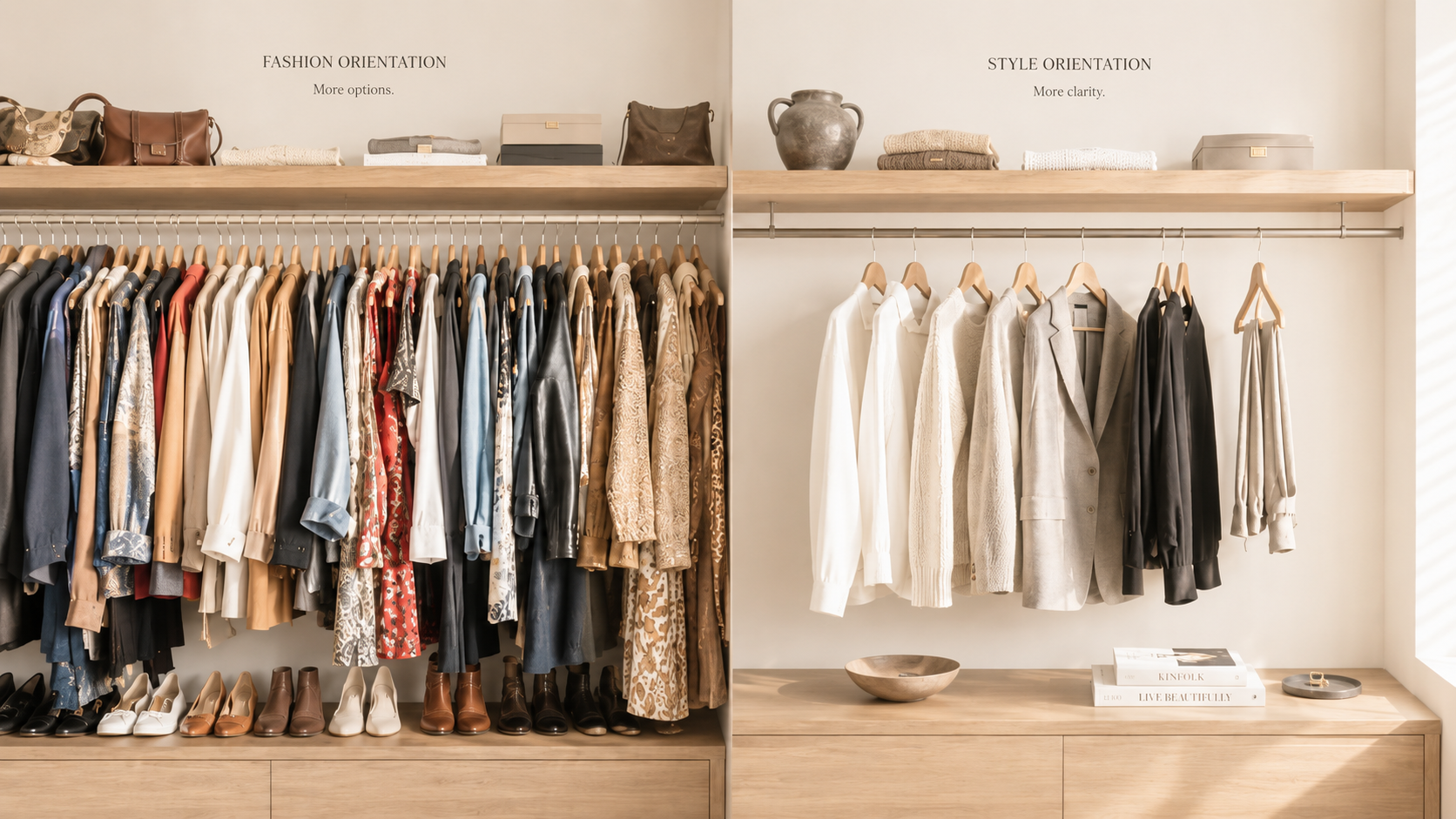
A fashion orientation is driven by novelty, variety, trends, and external signals. Fashion-oriented dressers often use clothes to communicate newness, taste, social awareness, or status.
A style orientation works differently. It is more inward-facing. Style-oriented dressers prioritize authenticity, longevity, uniqueness, and personal consistency. They tend to prefer pieces that outlast temporary trends and creatively reuse what they already own.
This distinction matters because a wardrobe built mostly around fashion can keep growing without making dressing easier. More options do not always create more clarity.
A wardrobe built around style is usually more useful because it reduces friction between who you are, how you feel, and what your day requires.
Some wardrobes are full of clothes. Others are full of decisions. The second kind is usually more helpful in the morning.
Five Wardrobe Personalities: What Your Closet Might Reveal
If style is identity made visible, then personality naturally shows up in clothing choices.
Not in a rigid way. No one is just one type. Most people move between several, depending on mood, season, work, weather, and whether the laundry situation is emotionally stable.
But patterns do appear.
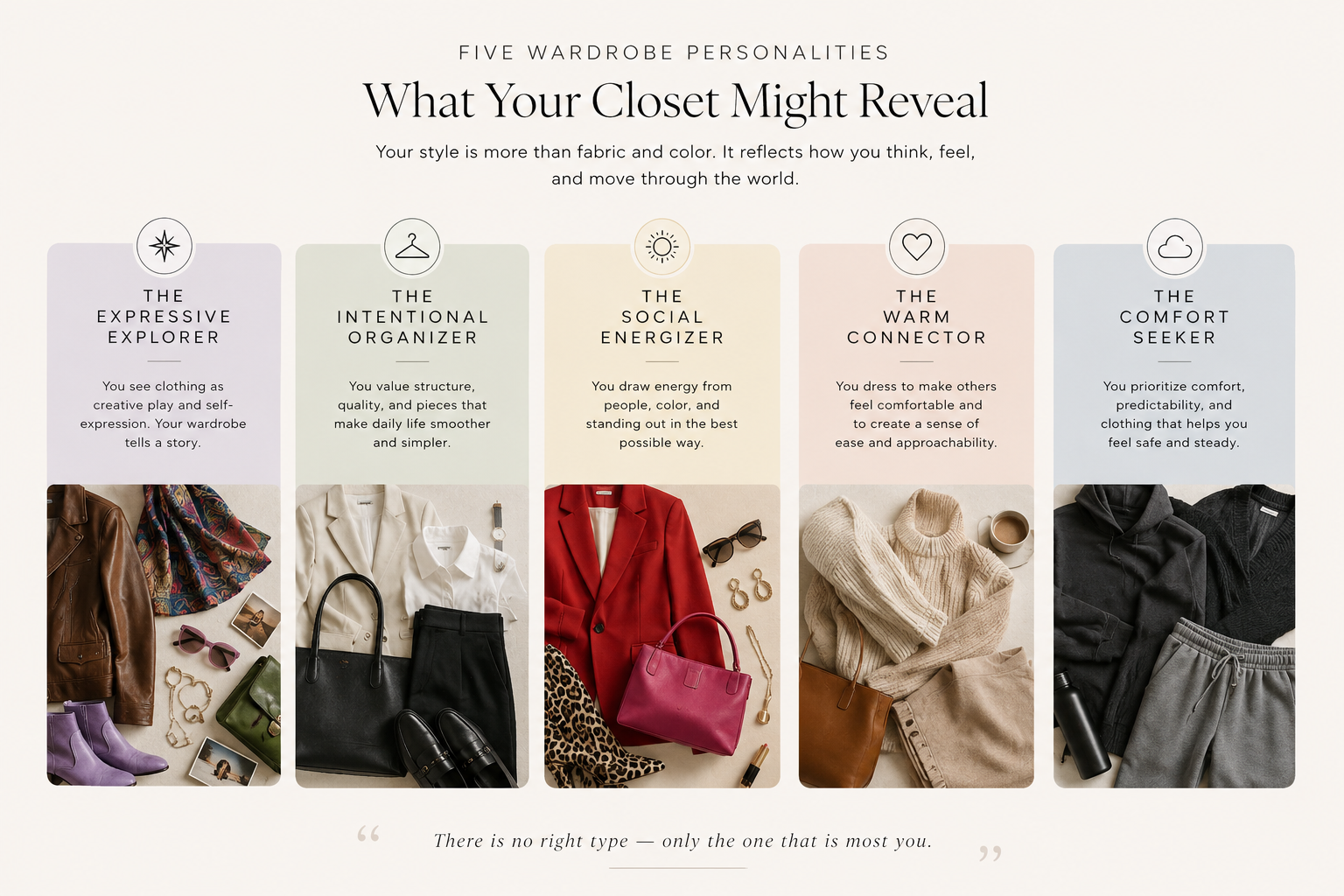
The Expressive Explorer This is the person who treats clothing as experimentation. Their wardrobe may include vintage finds, unusual silhouettes, unexpected color combinations, or pieces that feel like visual storytelling. For them, getting dressed is a creative act. The outfit does not just cover the day. It adds a little plot.
The Intentional Organizer This person values structure, reliability, and control. Their wardrobe often includes tailored fits, clean lines, polished basics, and pieces that make mornings more efficient. They do not want the closet to create extra decisions. They want it to cooperate.
The Social Energizer This person uses clothing as social energy. Bold colors, prints, statement accessories, and visible details help them feel expressive and present. Their outfits often enter the room a few seconds before they do, which is sometimes exactly the point.
The Warm Connector This person dresses for softness, ease, and approachability. Their wardrobe may include comfortable fabrics, gentle colors, relaxed shapes, and pieces that feel welcoming rather than intimidating. Their clothes often communicate warmth before they say anything.
The Comfort Seeker This person uses clothing as emotional regulation. Familiar outfit formulas, soft textures, dark tones, oversized layers, or predictable silhouettes can create a sense of safety and control. For them, a good outfit is not only about looking right. It is about feeling steady.
This is why generic wardrobe advice often fails. A "perfect capsule wardrobe" only works if it fits the person living inside it.
Enclothed Cognition: How Clothes Change Your Brain
The relationship also works in reverse. Your personality influences what you wear, but what you wear can influence how you think.
This is known as enclothed cognition.
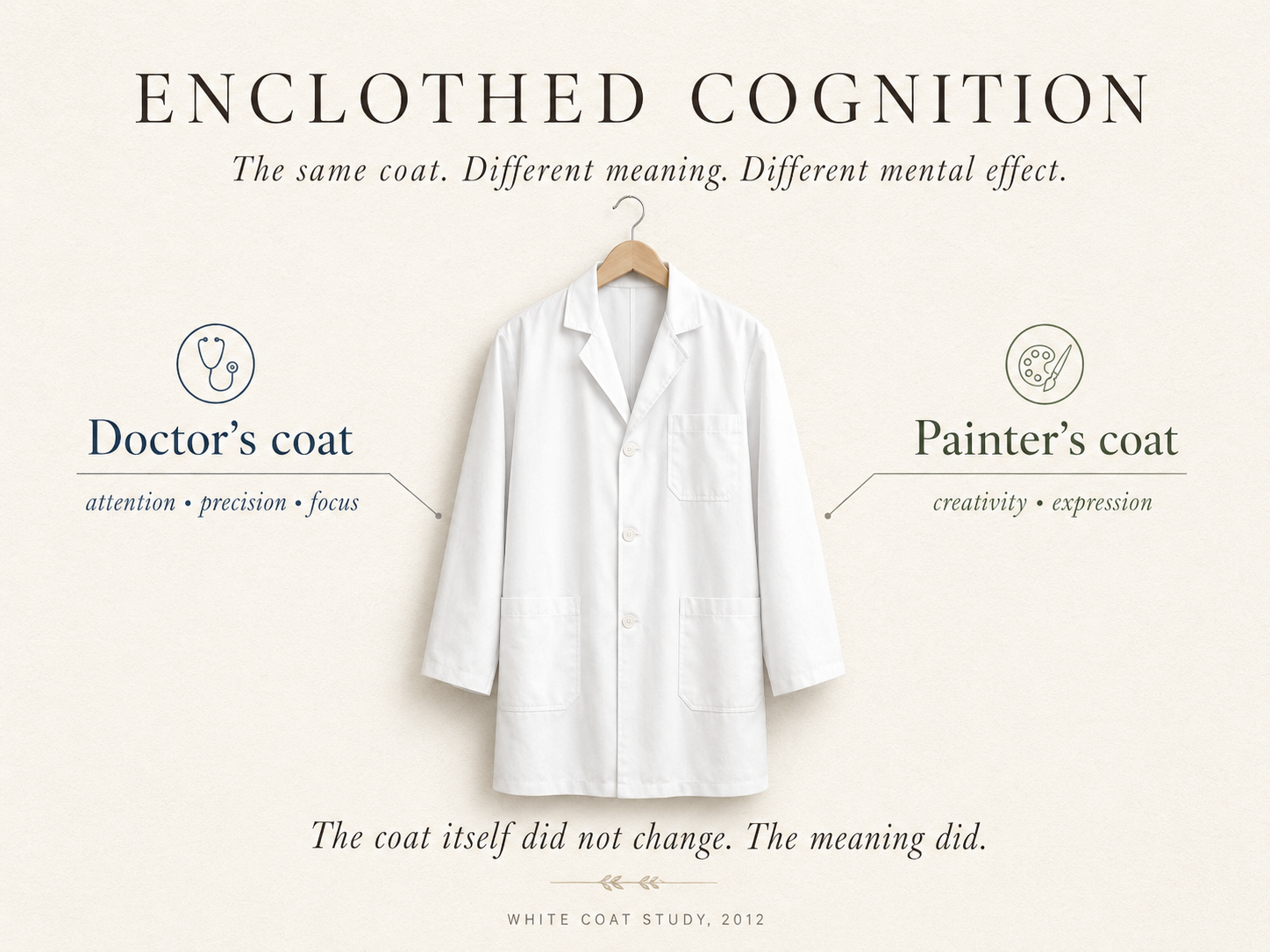
In a well-known 2012 study, participants wore the same white coat. Some were told it was a doctor's coat, while others were told it was a painter's coat. Those who believed they were wearing a doctor's coat performed better on tasks requiring attention and focus.
The coat itself did not change. The meaning did.
Clothes carry associations. A blazer may prime confidence. Athletic wear may signal movement. A structured coat may create a sense of control. A soft knit may calm the nervous system before you even notice you are tense.
Clothes do not magically transform us. But they can give the brain useful cues about who we need to become for the day.
Dopamine Dressing, But More Personal
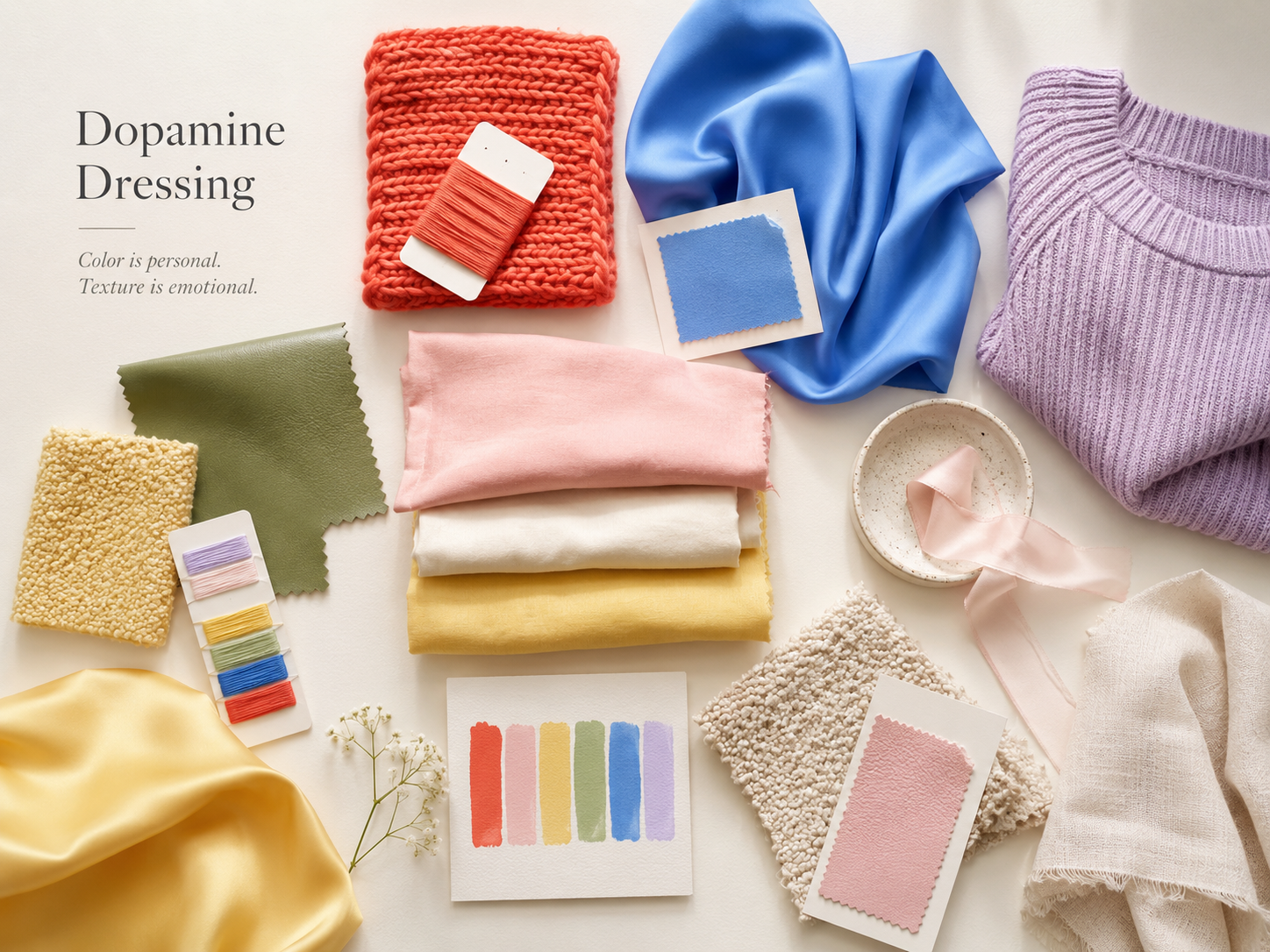
You can use this intentionally through "dopamine dressing": choosing colors, textures, and silhouettes to influence your mood.
But the useful version is not simply "wear bright colors."
Red may feel powerful to one person and overwhelming to another. Blue may feel focused. Black may feel precise. Cream may feel calm. Leather may feel protective. Linen may feel mentally lighter. A soft sweater may feel like wearable therapy on a difficult morning.
The point is not to follow universal color rules. The point is to notice what reliably changes your state.
A good outfit does not only ask: "Does this look good?" It also asks: "Does this help me feel ready?"
The Takeaway
Dressing authentically is not superficial. It is a daily act of alignment.
When you stop dressing only for trends and start dressing for your actual life, your wardrobe becomes more than storage. It becomes a decision system: one that can reduce stress, support confidence, and make mornings feel less chaotic.
Tomorrow morning, instead of asking:
"Does this look good?"
try asking:
"What do I need this outfit to help me do today?"
Sometimes the right outfit is not the most impressive one.
It is the one that quietly resolves the decision.