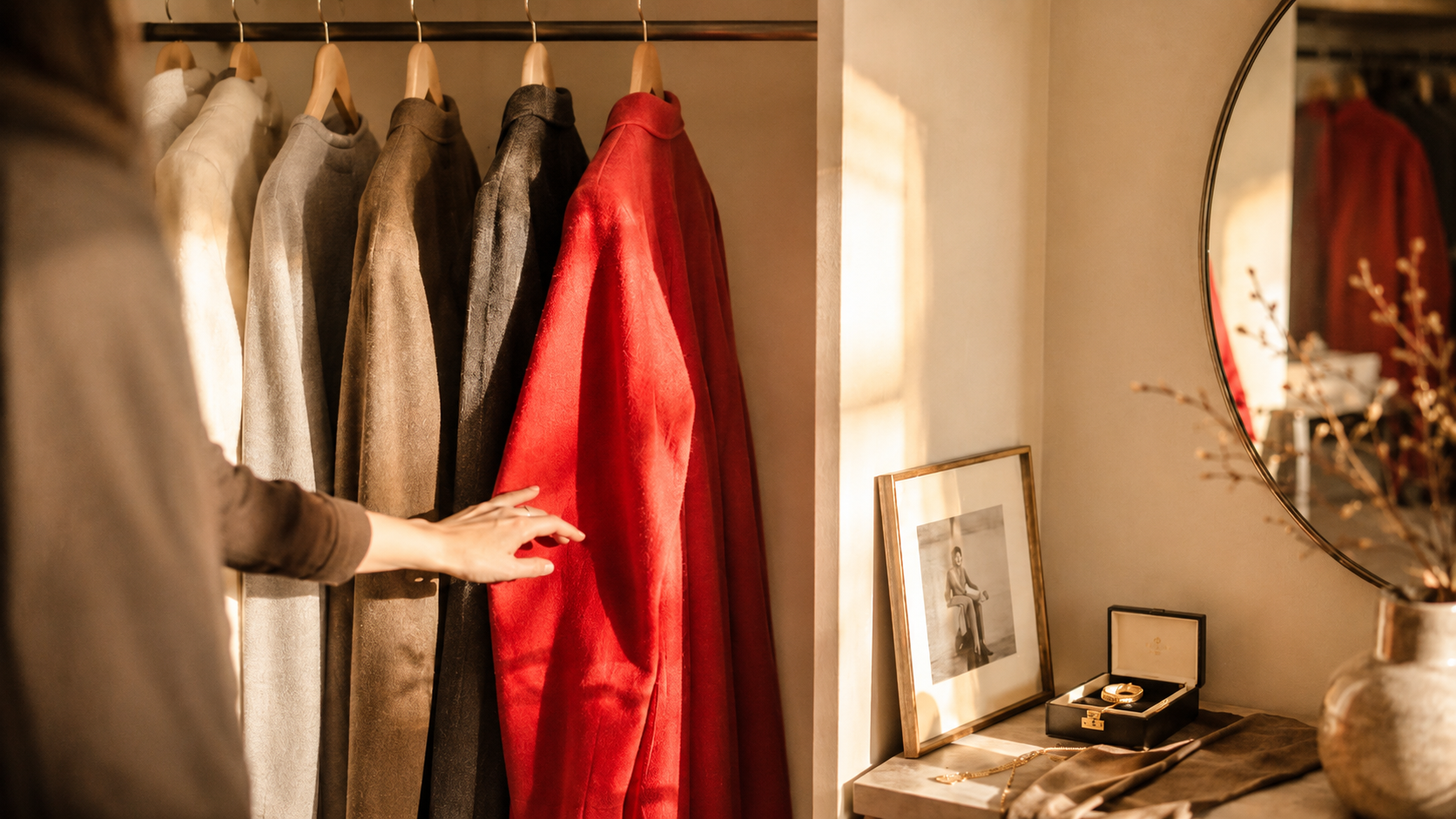
Some clothes look good in photographs.
Others make you feel more like yourself.
Ideally, you own a few that manage both.
The difference is easy to miss when our wardrobes are increasingly influenced by algorithms, saved posts, micro-trends and moodboards that somehow all contain the same six people wearing the same oversized blazer.
We have become very good at recognising what looks right.
We are not always as good at noticing what actually makes us feel better.
That is the point of the Dopamine Audit.
It is not about replacing your wardrobe with fluorescent trousers and declaring yourself emotionally healed. It is simply a way of noticing which clothes give you something back—confidence, comfort, energy, focus, ease—and which ones mostly looked convincing in the original reference image.
When Personal Style Starts to Feel Slightly Impersonal
Quick takeif your wardrobe looks like your saved folder but not quite like you, something got lost along the way.
Minimalism had a good run.
Neutral palettes, beautiful basics and quiet restraint offered a welcome break from excess. Then every feed began repeating the same silhouettes, colours and references until simplicity occasionally started looking suspiciously like uniform.
To be clear: beige has done nothing wrong.
The problem begins when you choose something because it fits an aesthetic system better than it fits your actual life.
A wardrobe can be tasteful, coordinated and almost completely disconnected from its owner.
It can look correct and still make you feel absolutely nothing.
That may explain why recognisable details are becoming interesting again:
- the colour you always come back to
- the silhouette that changes your posture
- the accessory that makes a basic outfit feel deliberate
- the texture you instinctively want to touch
- the slightly strange piece that makes perfect sense on you
This is not necessarily maximalism.
It is simply evidence that there is still a person inside the outfit.
Your Clothes Already Carry Meaning
Quick takethe garment matters, but what it means to you matters too.
Clothing does more than change how other people see us.
It can also change how we approach a situation.
Research into enclothed cognition suggests that clothing can affect attention and behaviour when we attach symbolic meaning to what we are wearing.
In one well-known experiment, the same white coat produced different effects depending on whether people believed it was a doctor's coat or a painter's coat.
Most wardrobes already contain pieces like this.
A structured jacket might make you feel decisive. A familiar knit might make your nervous system slightly less interested in filing a complaint. A certain pair of shoes might make you more socially confident. A reliable work outfit might help you enter “I know what I'm doing” mode before the first meeting has had a chance to test that theory.
This is also why a suit can make one person feel powerful and another feel trapped inside somebody else's job description.
"Clothing can help us enter a state. It can also keep us inside one."
Dopamine Dressing Is Not Just “Dress Happy”
Quick takesometimes you need energy. Sometimes you need a jumper that asks nothing of you.
Dopamine dressing is often presented as bright colour + cheerful print = happiness.
Convenient. But incomplete.
Feeling good does not always mean feeling energised.
Sometimes the state you need is:
- calm
- authority
- softness
- focus
- connection
- protection
- ease
Mood-based dressing can work in two directions.
Mood illustration
You dress in a way that supports how you already feel.
Low-energy day? Maybe the answer is soft texture, familiar proportions and absolutely nothing requiring you to pull it back into place every seven minutes.
The outfit does not need to reinvent you. It can simply cooperate.
Mood enhancement
You dress to move yourself slightly toward another state.
A strong colour might create momentum. A sharper jacket might help before a difficult meeting. An unexpected shoe might make a basic outfit feel more self-assured. A playful accessory might remind an overly serious Tuesday that it is, in fact, only Tuesday.
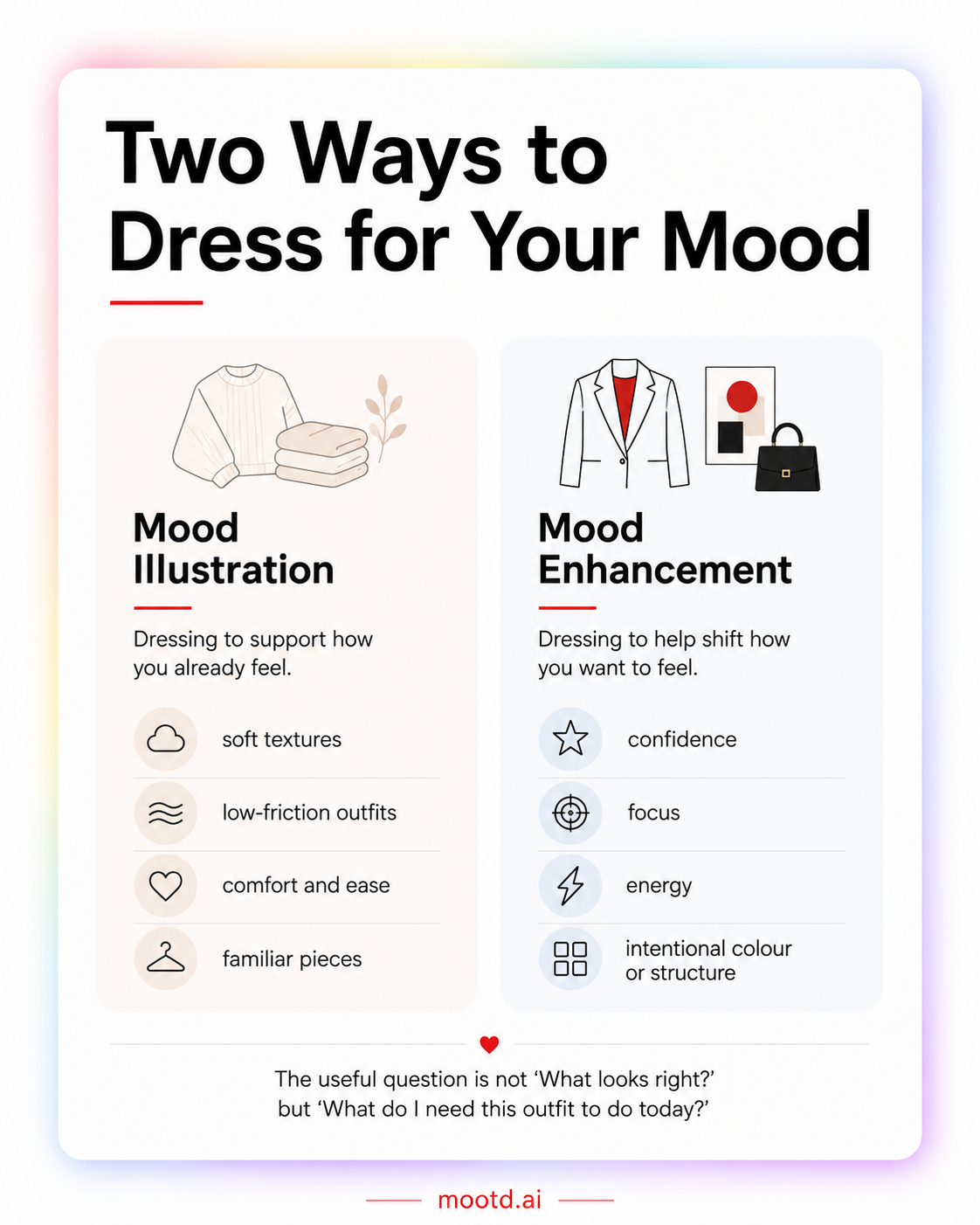
Neither method is better.
The useful question is:
"Does today's outfit need to meet me where I am—or help me move somewhere else?"
Much more useful than asking what the algorithm has decided we are all wearing this week.
Colour Helps. Your Own Associations Help More.
Quick takecolour theory is interesting. Your actual reaction is more useful.
Colour can influence perception, energy and attention.
But colour associations are not universal.
Blue might feel calm and focused to you. Or it might remind you of a corporate conference room where time stopped moving in 2017.
Red can feel confident, energetic or exhausting. Green can feel restorative, traditional or simply very good with your coat.
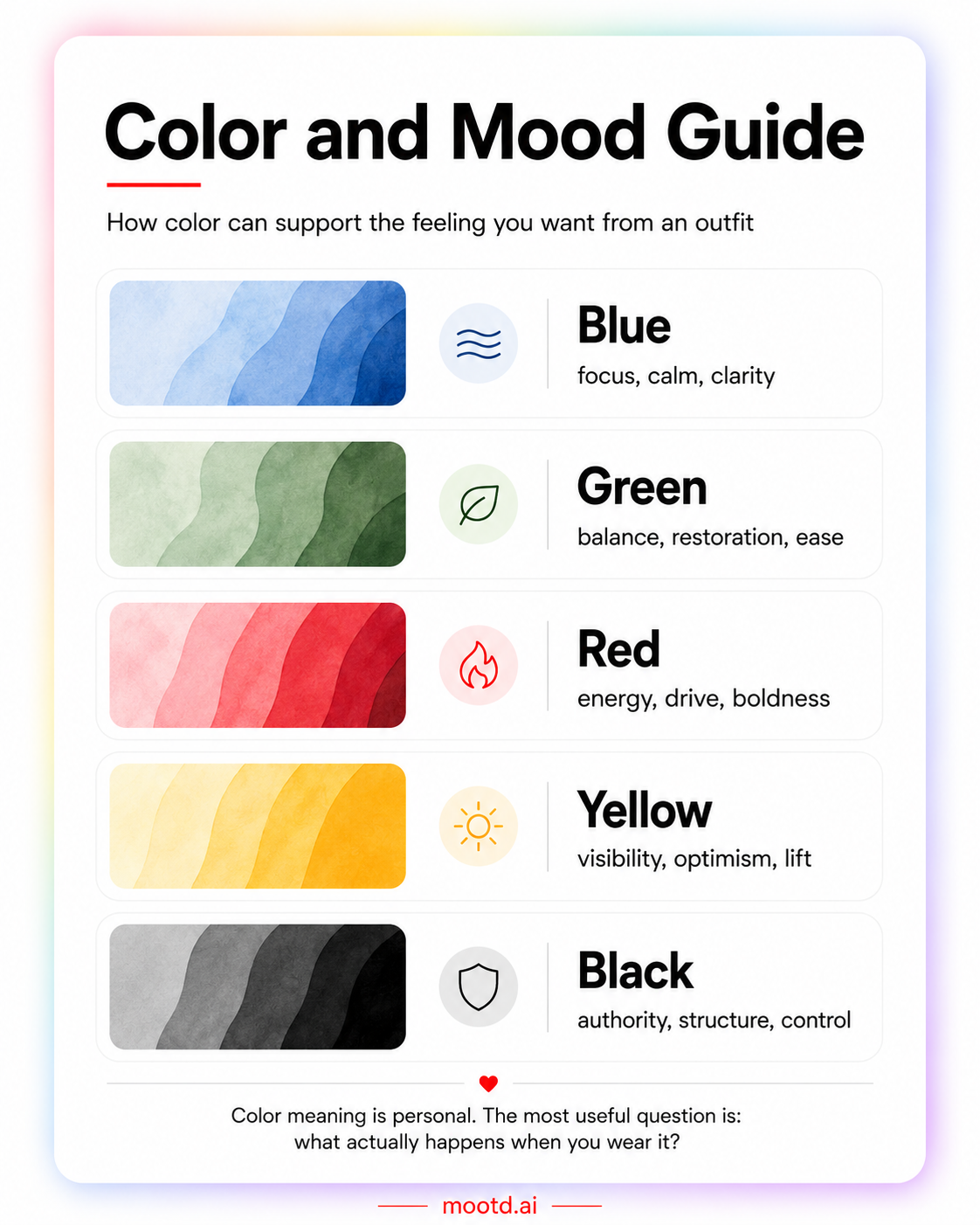
Culture matters. Memory matters. Personal association matters.
So instead of asking what a colour is supposed to make you feel, watch what happens when you actually wear it.
- Do you stand differently?
- Do you feel more visible—in a good way?
- Do you naturally reach for it again?
- Do you love wearing it, or do you mostly love it on other people?
There is a difference.
Your wardrobe has probably been trying to tell you for years.The Five-Step Dopamine Audit
This is not a dramatic wardrobe purge.
No bin bags. No emotional farewell ceremony for a cardigan.
You are simply collecting evidence about what works.
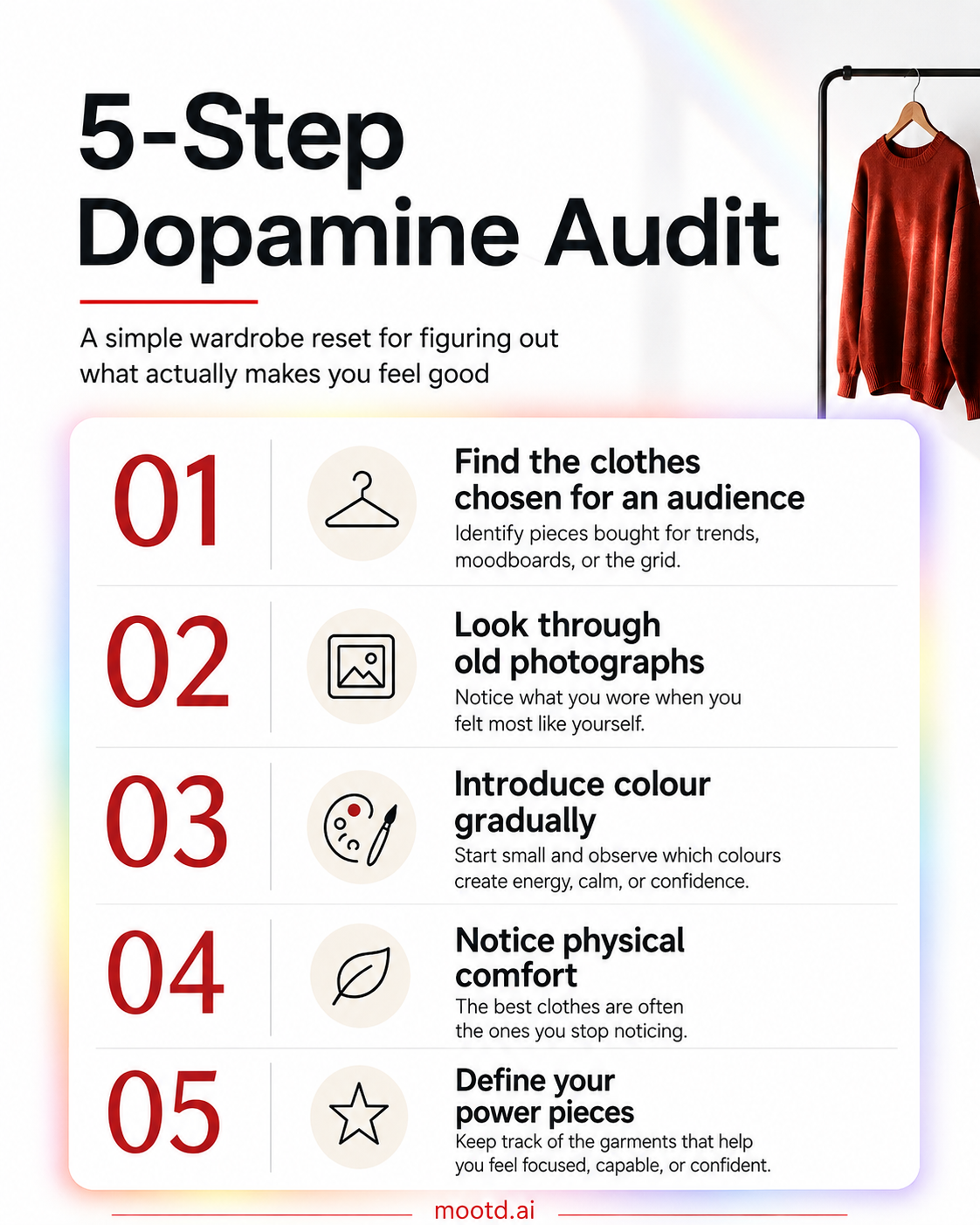
1. Find the Clothes You Bought for an Audience
Look for pieces purchased mainly because they matched:
- a trend
- a moodboard
- an influencer
- an aspirational version of your life
- a photograph involving much better lighting than your home has ever provided
Then ask: would I still choose this without the original reference image?
Does it work with what you already own? Do you enjoy wearing it? Does it make your life easier, better or more interesting?
Some trend-led purchases become genuine favourites. Others remain physical evidence of a brief period when you apparently believed you were moving to Copenhagen.
Both outcomes are useful information.
2. Search Your Own Visual History
Before finding another person to copy, look at yourself.
Old photographs can be surprisingly useful style research.
Find moments when you remember feeling:
- confident
- comfortable
- successful
- relaxed
- particularly like yourself
Then look at what you were wearing. Notice what repeats:
- proportions
- necklines
- structure
- colour combinations
- fabrics
- shoes
- accessories
- the balance between polished and relaxed
These are not permanent rules. They are identity anchors—evidence of things that have already worked.
Sometimes your best style reference is not someone on Pinterest. It is you, three years ago, in a jacket you somehow forgot you owned.
3. Add Colour Without Making It a Personality Change
You do not need to go from oatmeal to technicolour overnight.
Start small. Try:
- a scarf
- socks
- a bag
- a belt
- a shirt under a neutral layer
- jewellery
Notice what gives you the response you want. Then increase the colour if it works.
The purpose is not to become A Person Who Wears Colour™. It is simply to discover which colours reliably give you energy, confidence, calm or pleasure.
4. Remove Physical Friction
This part is less glamorous and possibly more important.
An outfit has difficulty improving your mood when you spend the day correcting it.
Question anything that:
- pinches
- pulls
- slides
- restricts movement
- makes you self-conscious
- needs constant checking
An objectively flattering garment can become surprisingly expensive in attention. If you spend eight hours thinking about your trousers, the trousers are winning.
Instead, ask:
Where do I like structure? Where do I need movement? Which fabrics make me feel comfortable? Which proportions make me feel balanced? Which clothes allow me to forget about them once I leave the house?
5. Identify Your Power Pieces
Most people already own a few garments that carry more psychological weight than their price tag or practical function suggests.
These are your reliable pieces.
The jacket that makes you feel capable. The knit that makes travel easier. The unusual shoe that makes a simple outfit feel intentional. The coat that somehow makes entering a crowded room slightly less annoying.
Notice them. Then connect them to the situations where they help.
Big meeting → this jacket.
Low-energy day → this knit.
Need confidence → these shoes.
Need zero unnecessary decisions → this outfit.
Now your wardrobe is doing something useful. It is becoming a set of reliable decisions instead of a collection of theoretical possibilities.
The Best Wardrobe Is One You Can Read
A successful Dopamine Audit does not leave you with a perfectly edited wardrobe.
It leaves you with a more understandable one.
You know what creates focus. What creates confidence. What feels comforting. What gives you energy. And what has been occupying a hanger for two years while contributing mainly to guilt.
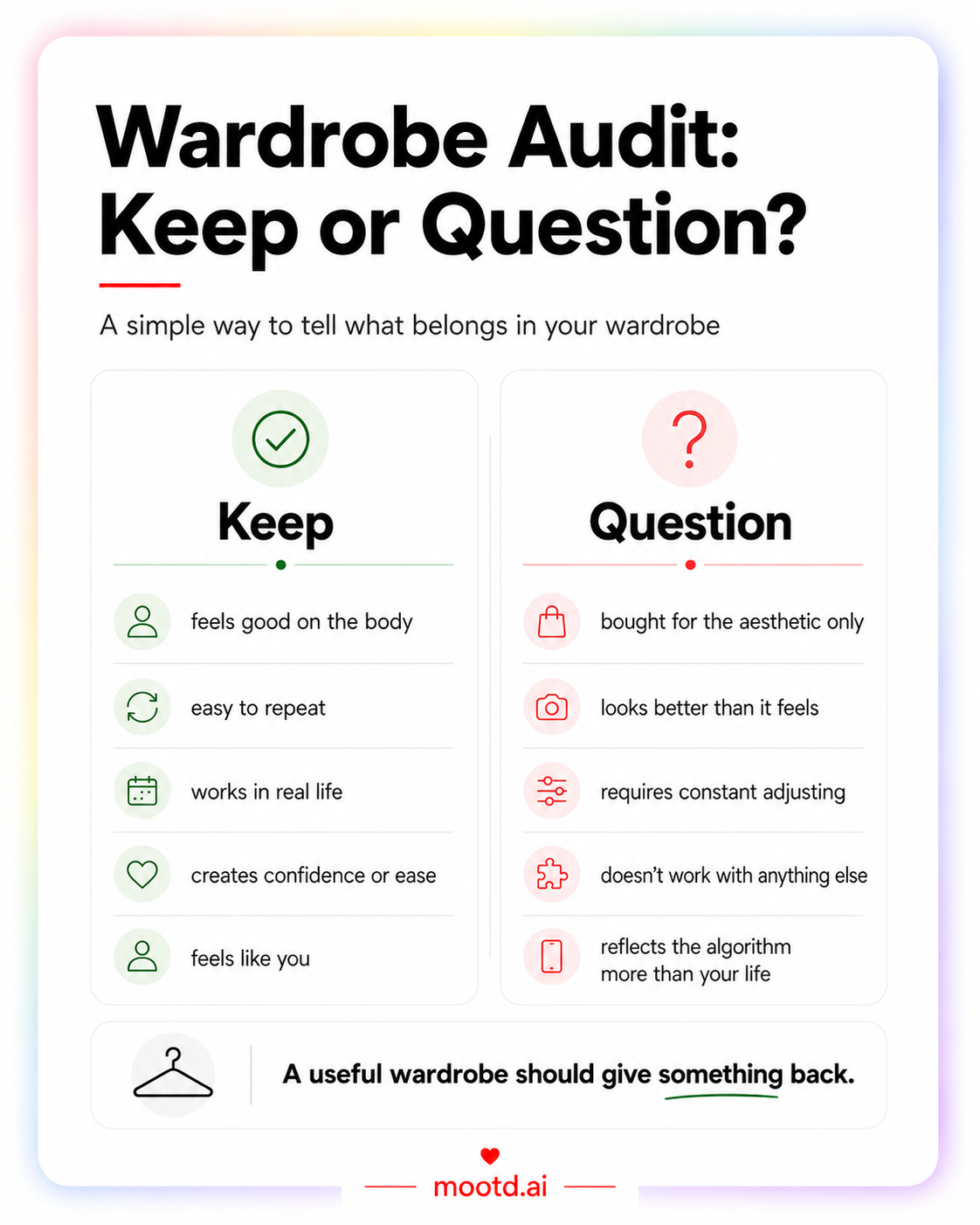
That distinction matters.
Because the goal is not to create a wardrobe that performs beautifully for an image. It is to create one that performs well for your life.
Not every item needs to spark joy. Some can spark competence. Some can spark calm. Some can simply get you dressed and out of the house without starting negotiations.
That counts too.
"People do not need more inspiration saved in folders. They need to know what actually works—and why."
MOOTD is building a wardrobe decision engine for people who want their clothes to support the day ahead, reduce unnecessary decisions and make getting dressed feel a little more resolved.
Ready to find out what actually works for you?
MOOTD helps you see which pieces in your wardrobe consistently earn their place — before you buy anything new.
Join the waitlist"The goal was never a more exciting wardrobe. It was one you understand."